The Holderman House

CIRCA 1860

Happy Valley Bodyworks at the Holderman House a Centre County historical gem. Newly renovated in 2024, this 160 year old building is now a place of healing.
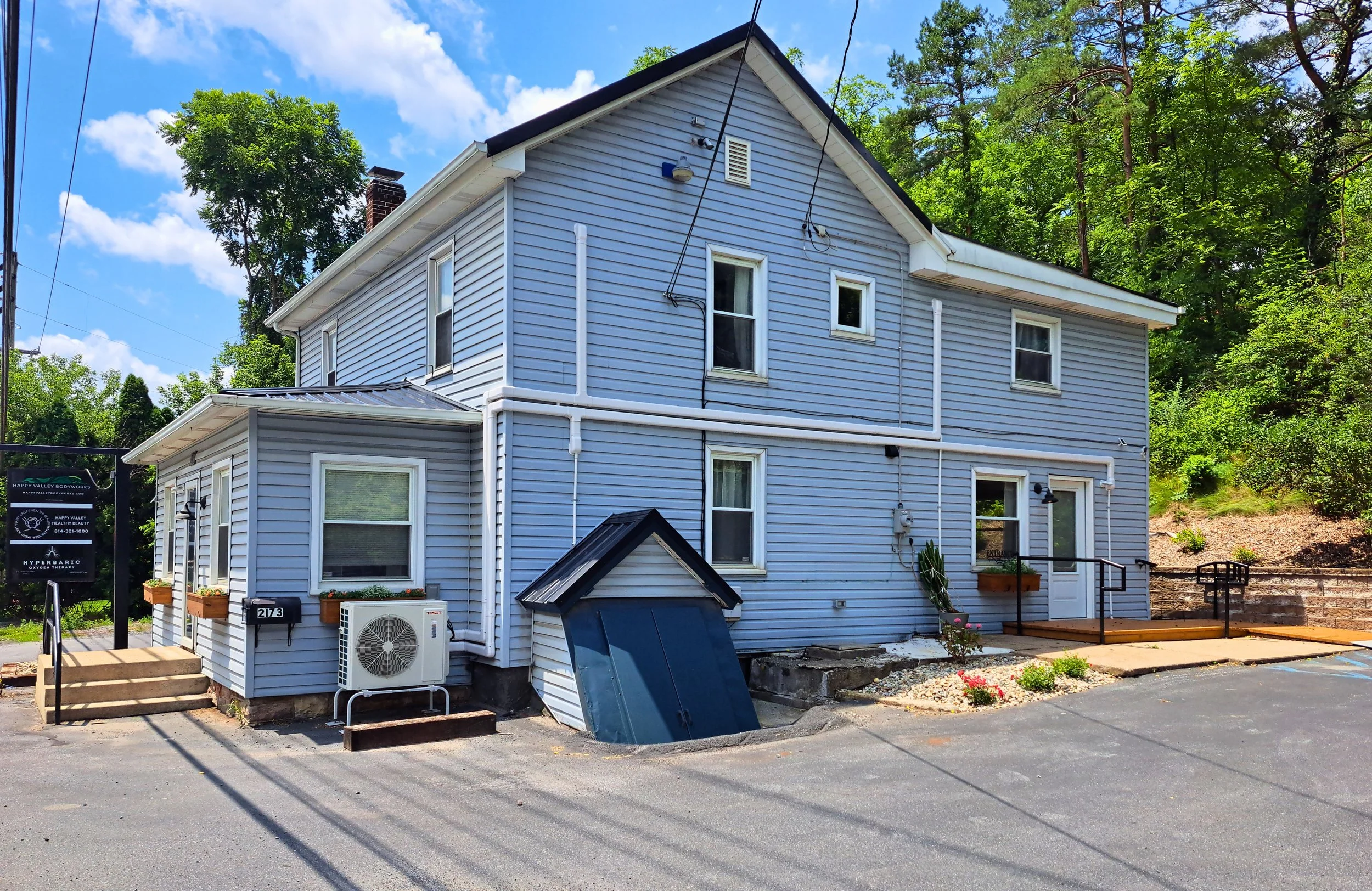
From an 1800’s farm to a place of healing.

  • A bedroom with a massage or examination table, a small wooden dresser with a mirror, a chair, a lamp with two shades, a gallery wall with framed sketches, a window with sheer curtains, a dark cabinet, and a potted plant.
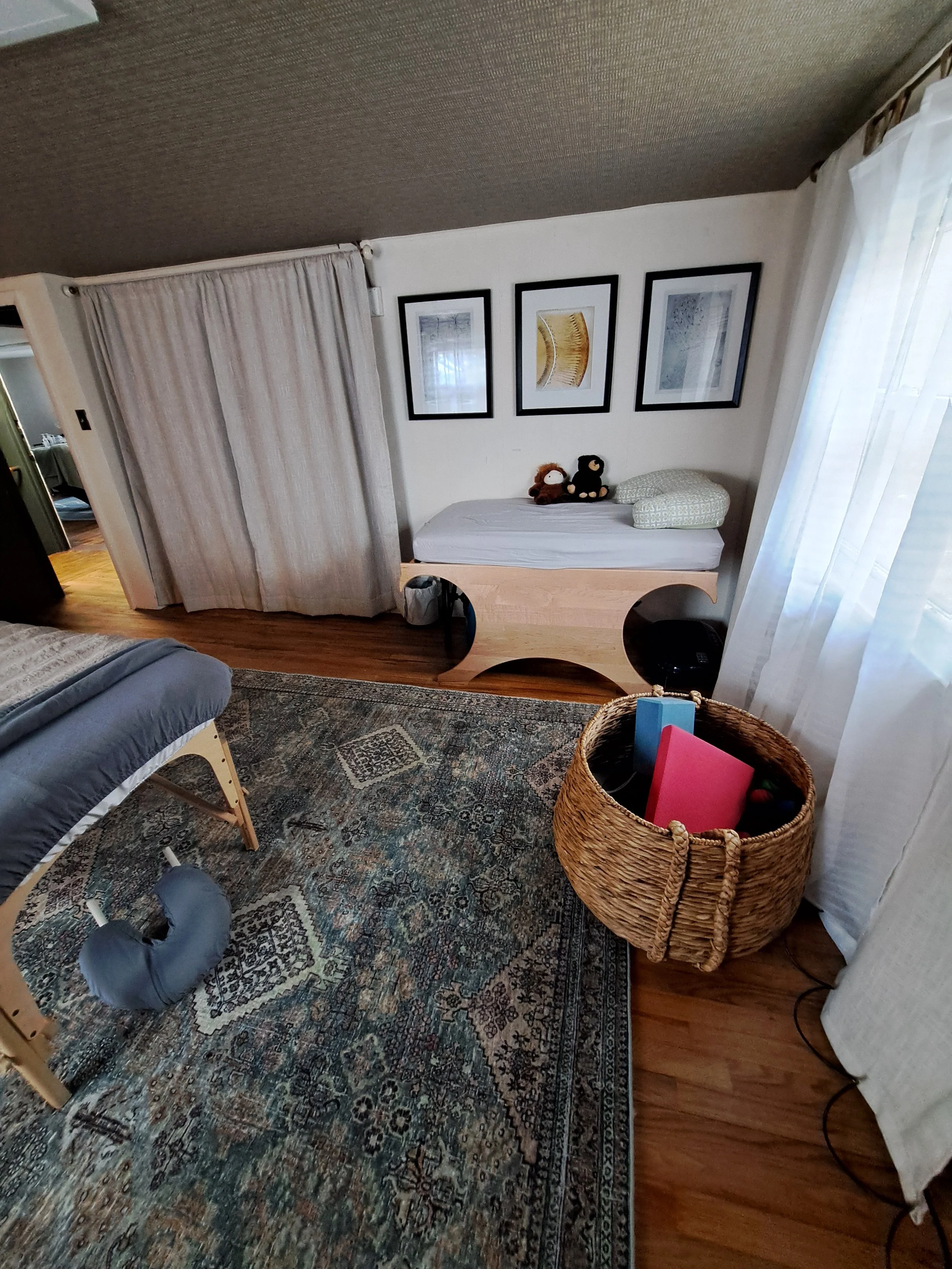
  • Pediatric therapy and play room located off the main therapy room. bring your child to your therapy session.
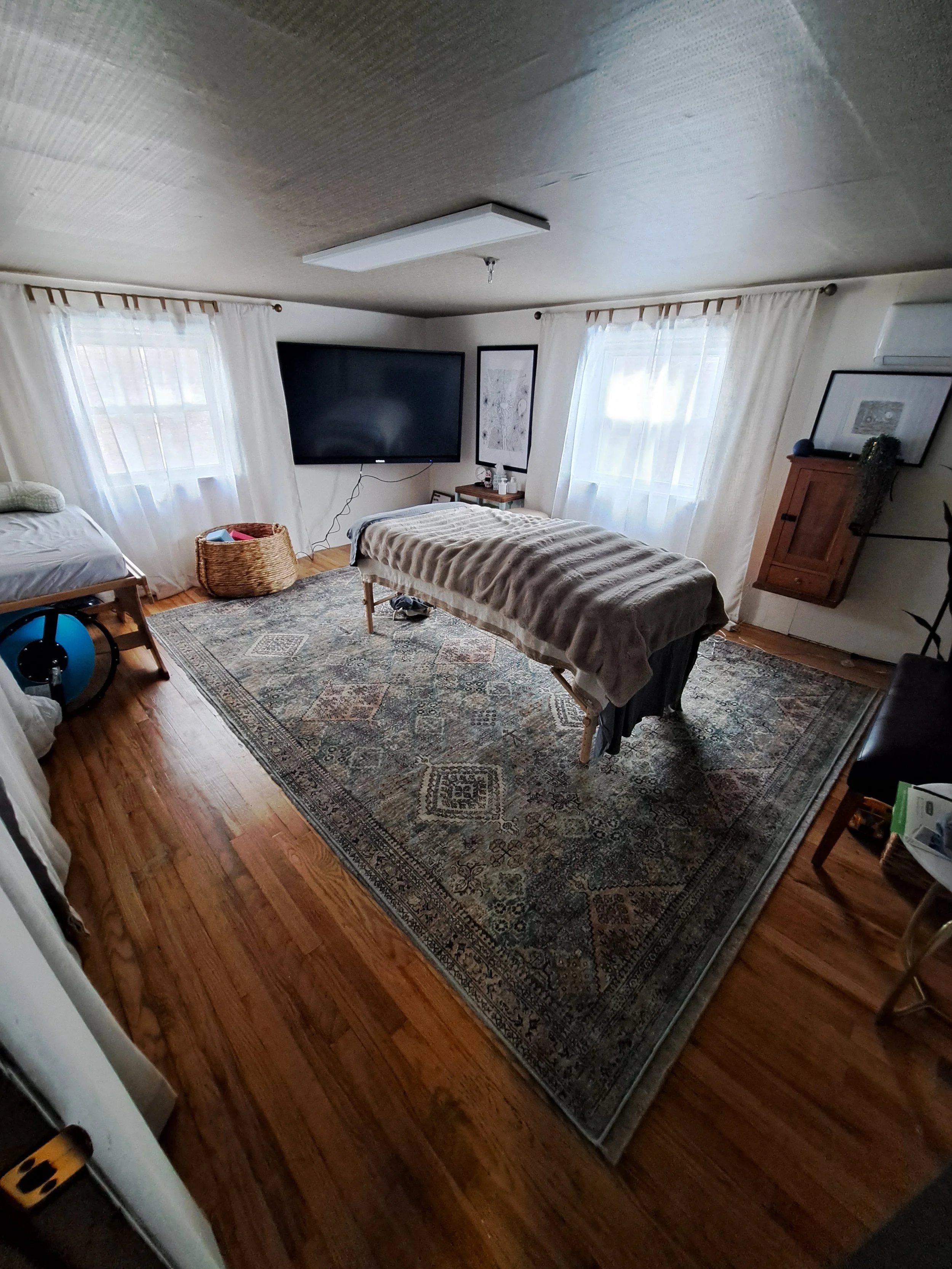
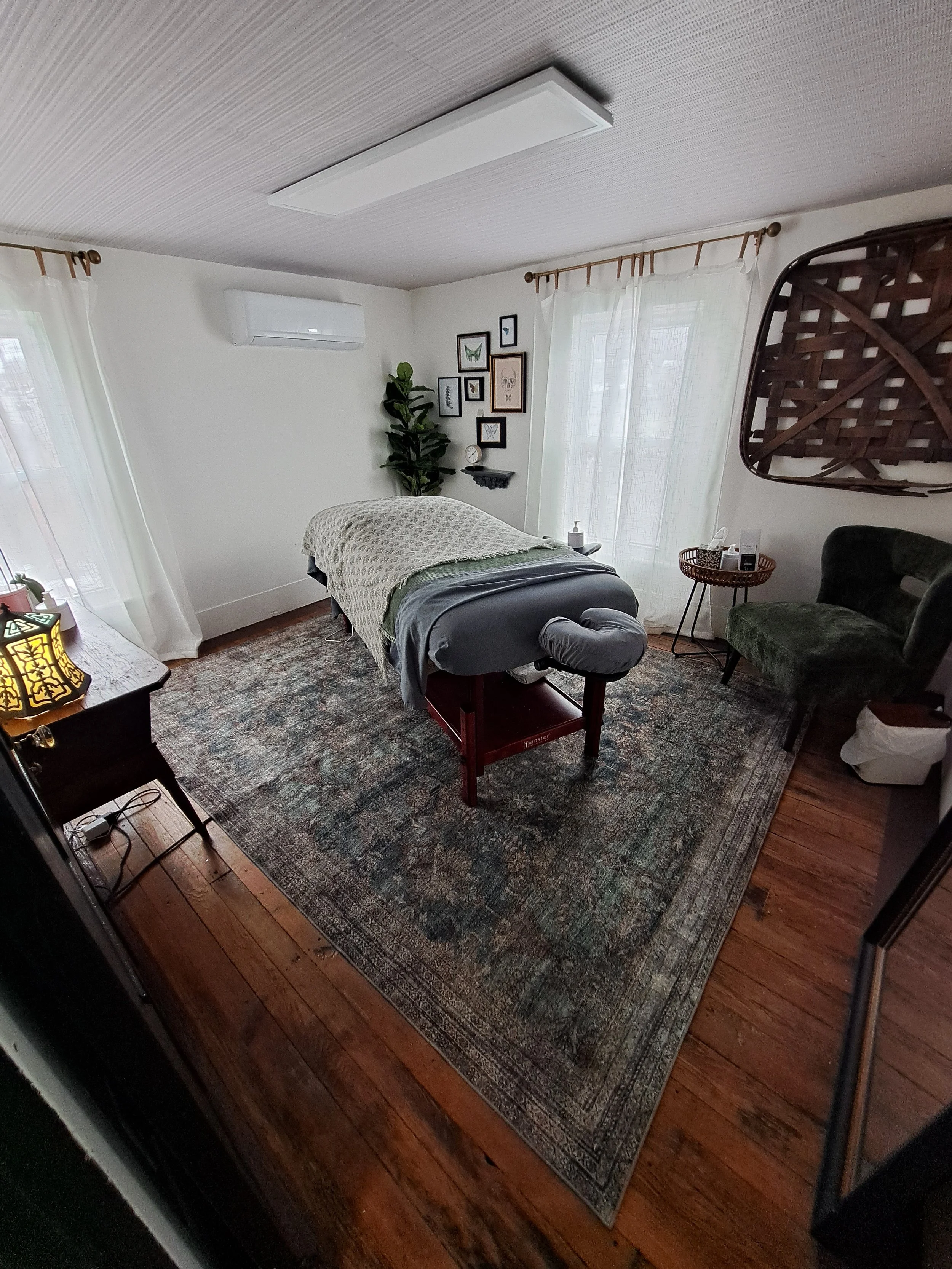
  • Main therapy room, holderman House, 1860s farm house,
  • Massage table in a room with a large rug, a window with curtains, and various plants and furniture.
  • Therapy room, stylish, cozy
  • Waiting room, newly renovated facility, holderman house
  • A narrow hallway with white walls, wooden flooring, framed pictures on the walls, a mirror, an exit sign, and a ceiling light fixture.
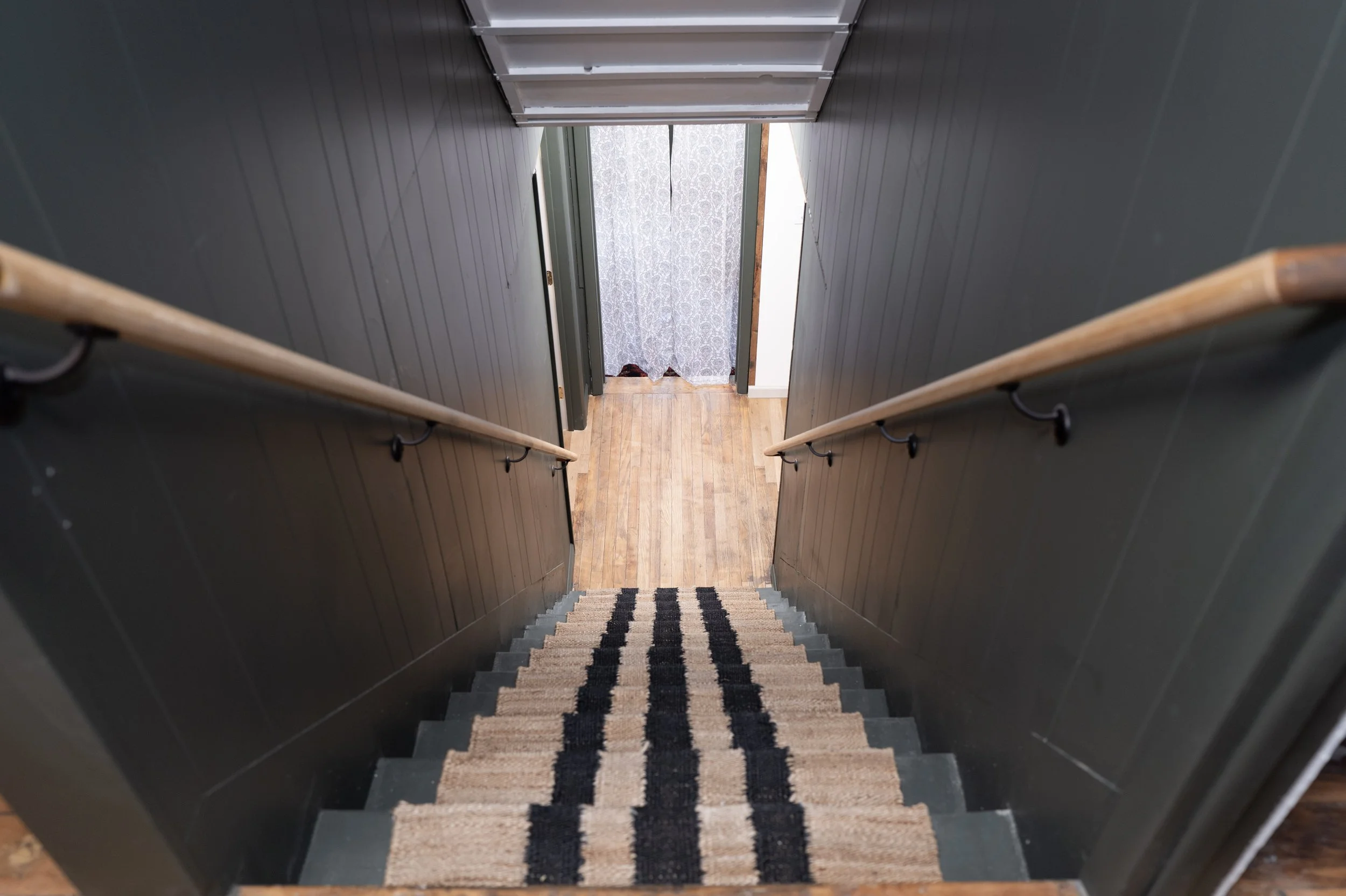
  • Top view of a staircase with a beige and black striped runner, wooden handrails on both sides, leading down to a wooden floor and a door with lace curtains.
  • A room with a massage table in the center, a black bench on the left, a small table with plants on the left, a wooden side table with a lamp on the right, framed artwork on the wall, and large windows with patterned curtains, light-colored walls, and a wooden floor.
  • A massage or therapy room with a massage table draped in a beige cover, a black seating bench, a wooden side table with a lamp, framed artwork on the walls, a patterned curtain, and a plant.
  • Indoor room with a white cylindrical underwater pool with a 'Summit to Sea' logo, placed on a patterned rug next to a wooden cabinet and a window with sheer curtains.
  • Accessible bathroom with white walls, wood flooring, a toilet, a small sink, a mirror, wall-mounted grab bars, a toilet paper holder, a trash bin, and a decorative plant shelf with small potted plants.
  • A cozy therapy room with a massage table, blue couch, side table with lamp, potted plant, wall art, window with sheer curtains, and a chandelier lighting fixture.
  • A wall decorated with framed black and white anatomical sketches of the human body and internal organs.
  • A hallway with a black wall and a framed artwork of a human profile with a detailed internal structure of branches and dots, looking into a room with a wooden dresser, a table lamp, a mirror, and a woven wall hanging.
  • Decorative wall with three picture frames of different sizes and colors, and a black ornamental birdcage with a potted plant inside, set against a white wall.
  • Gallery wall with framed animal illustrations, including a skull with a butterfly, a cat, a butterfly, and a fox, in a room with white walls and wicker furniture.
  • Framed anatomical illustrations of human bones, muscles, and organs on a white wall.
  • Cozy waiting area with a blue couch, two black chairs, a wooden coffee table, a bookshelf, indoor plants, and a window with white curtains.

“The Holderman House”

The History of 2173 East College Avenue

Research has traced the origins of this folk plank-style farmhouse to its original owners, Abraham Halderman (1795–1866) and Cathrine Houser (1804–1875). Over time, the family surname evolved to the more commonly seen “Holderman,” based on deed records and gravestone inscriptions.

Cathrine was the granddaughter of Jacob Houser, the founder of Houserville, while Abraham was the grandson of German immigrant Jacob Holeman (b. 1722). The Holderman family migrated to what was then Spring and Harris Townships (now College Township) between 1817 and 1820. Abraham and Cathrine married in 1820.

In 1838, Abraham purchased land from James Irvin, as well as additional property from his father during the same period. These acquisitions mark the likely beginning of the home’s story. Over the years, the Holdermans were involved in other significant land transactions in the region, including portions of Mount Nittany.

The original 1830s Holderman homestead—separate from the current structure—still stands in nearby Lemont. That home is believed to have served as a community gathering space and the founding location of the local Methodist church, which remains active today.

The 2173 farmhouse was likely inhabited by Abraham and Cathrine’s eldest son, John Holderman, a connection supported by Orphan Court documents from the late 1800s. John would go on to serve as a Sergeant in the 184th Pennsylvania Volunteer Infantry during the Civil War.

Several members of the Holderman and Houser families served in both the Revolutionary War and the Civil War, adding further depth to this family's historical legacy. After Abraham’s death in 1866, Cathrine maintained the estate until it was passed down to John. In 1876, the property was sold to the Hoy family, along with significant surrounding acreage, which was distributed among five additional families.

Over the next 147 years, the building changed hands many times. In 2023, renovations began under new ownership, breathing new life into the historic home. Today, it is the proud home of Happy Valley Bodyworks and Happy Valley Healthy Beauty—a modern space rooted in deep local history.Visit our waiting room for a more extensive history of our building!