
Primitive Reflex and Sensory Integration
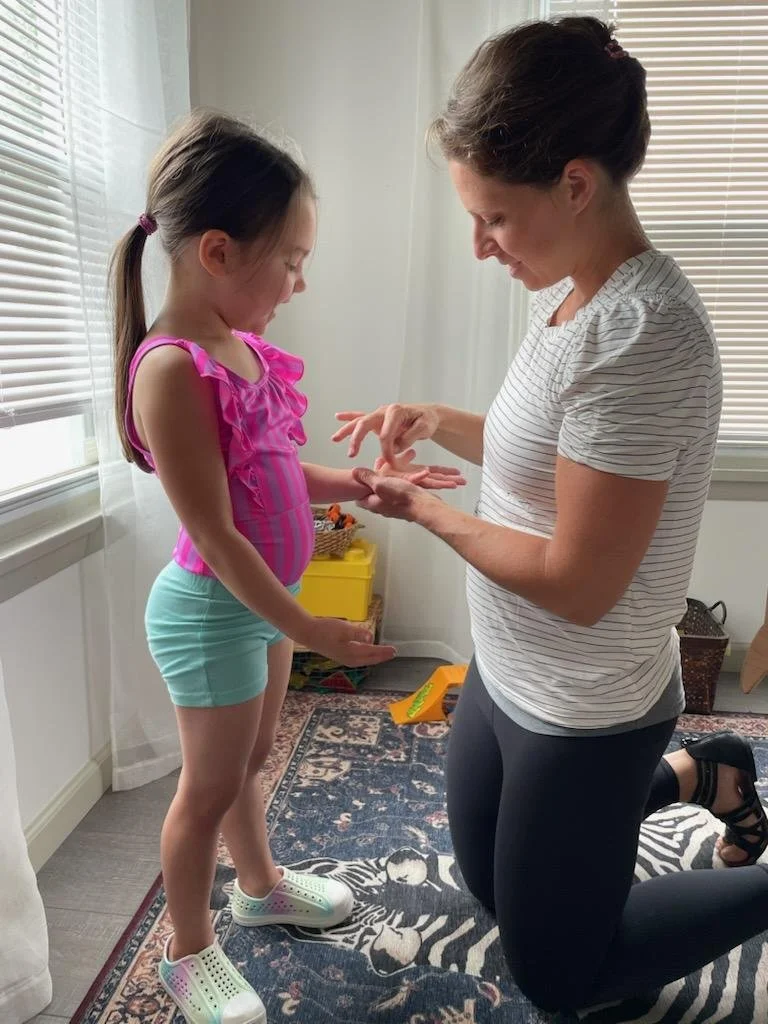
Research suggests that up to 90% of children ages 4-6 have at least one retained primitive Reflex.
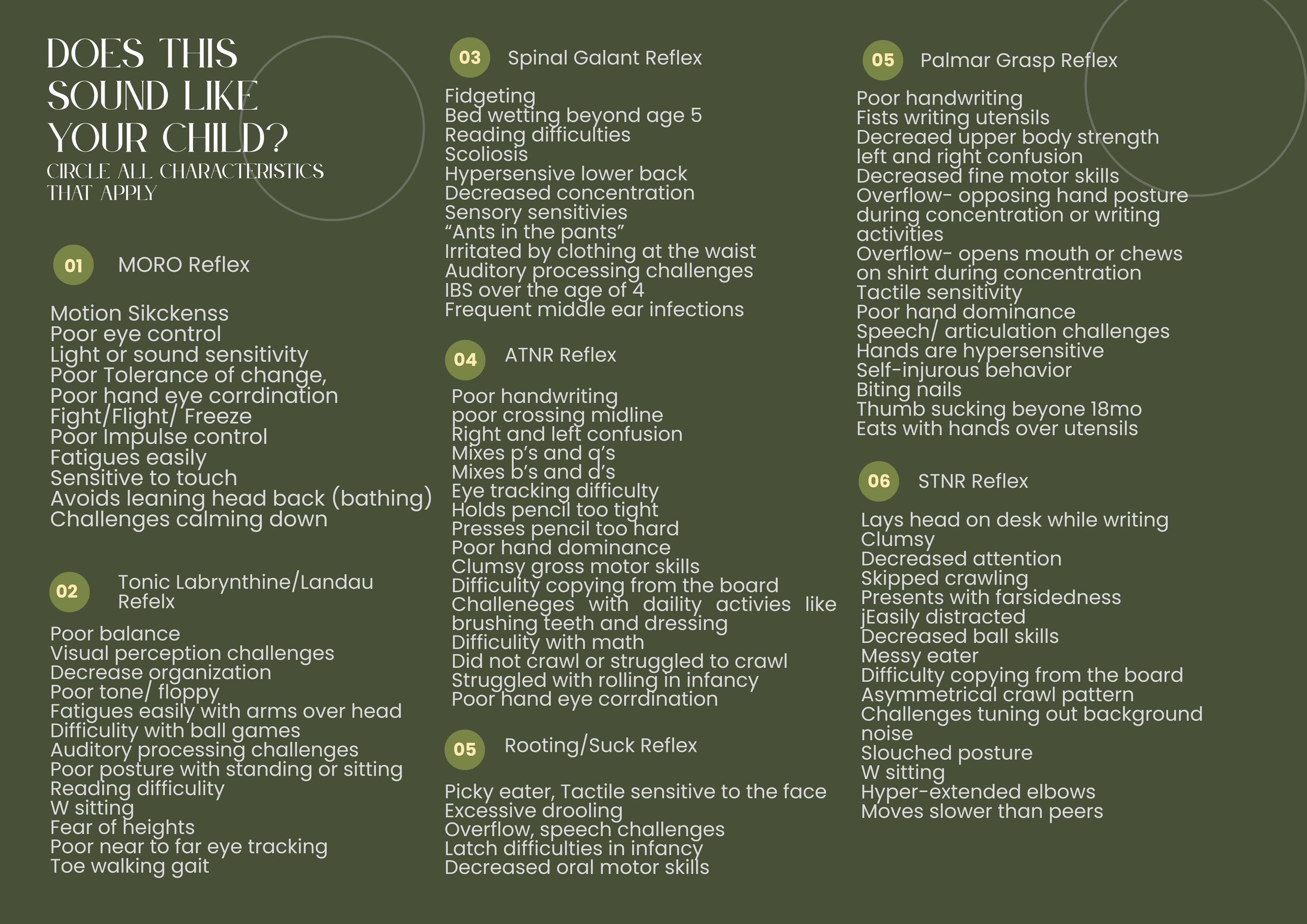
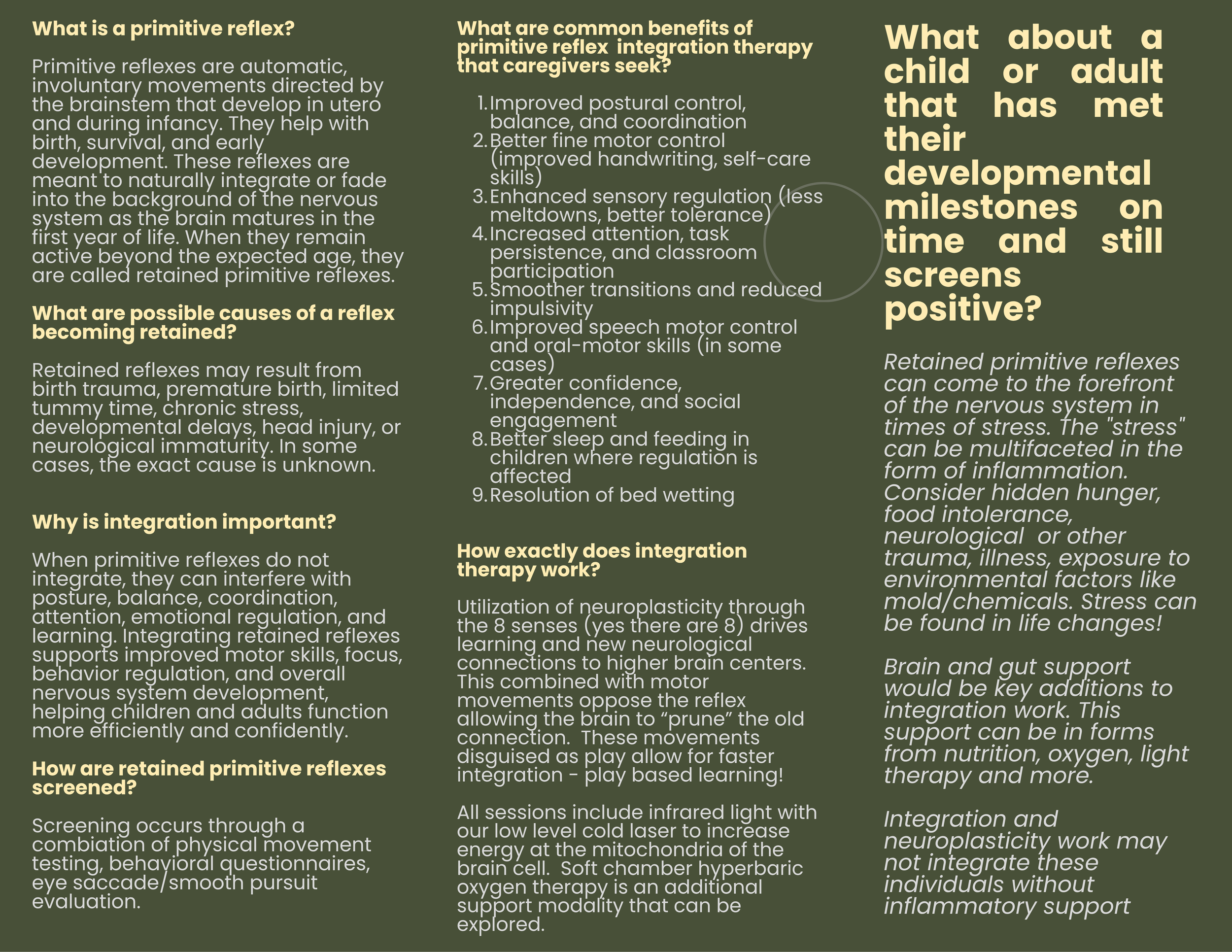
Our Pediatric Integration Manual was created from a perspective that goes beyond clinical knowledge—it was built by a parent who has personally walked the long, often overwhelming journey of searching for answers for their own child. Every recommendation was thoughtfully selected to simplify the process for families and reduce the stress of figuring out "what comes next."
Rather than sending parents home with a list of disconnected exercises, we've organized practical home activities, simple eye-tracking exercises, nervous system support strategies, lifestyle suggestions, and trusted referral recommendations into one easy-to-follow resource. The goal is to help caregivers feel confident, supported, and empowered while creating calm, manageable routines that fit into everyday life. We believe progress happens best when families have a clear path forward and children feel encouraged—not overwhelmed—along the way.
Retained primitive reflexes can quietly impact a child’s development long after infancy. When these early reflexes remain active, they may contribute to gross motor delays, sensory seeking or sensory avoidance behaviors, learning challenges, emotional regulation difficulties, and poor coordination. Often misunderstood or overlooked, these neurological patterns can affect how a child moves, focuses, and interacts with their environment. Understanding retained primitive reflexes is an important first step toward supporting more efficient brain–body communication and helping children build a stronger foundation for movement, learning, and regulation.
If this sounds like your child, we are here to serve the whole family.
Our facility offers modalities backed by decades of clinical research to give your child’s body and brain support in combination with therapeutic exercise programs to integrate these primitive reflexes and give your child a step up to thrive.
Extinguish the Fire—Then the Body Can Learn.
Photobiomodulation therapy and hyperbaric oxygen therapy are powerful, clinically supported tools used to reduce inflammation, increase cellular ATP production, and improve oxygen delivery at the tissue level.
By calming an overactive inflammatory response and supporting cellular energy and healing, these therapies help “put out the fire” in the nervous system—creating a more stable internal environment while introducing therapeutic exercise.
When inflammation and metabolic stress are reduced, the brain and body are better able to process movement, integrate reflex patterns, and adapt to change.
Bodywork is an essential companion in this process, restoring range of motion, improving tissue mobility, and ensuring the body can move efficiently as the nervous system builds healthier, more resilient patterns.
Why these package items?
Photobiomodulation or Low Level Cold Laser therapy is best utilized at 2-3x per week for a minimum of 30 days for improved ATP production at the cell. This modality is utilized during the therapy session in combination with multi-movement and sensory patterns .
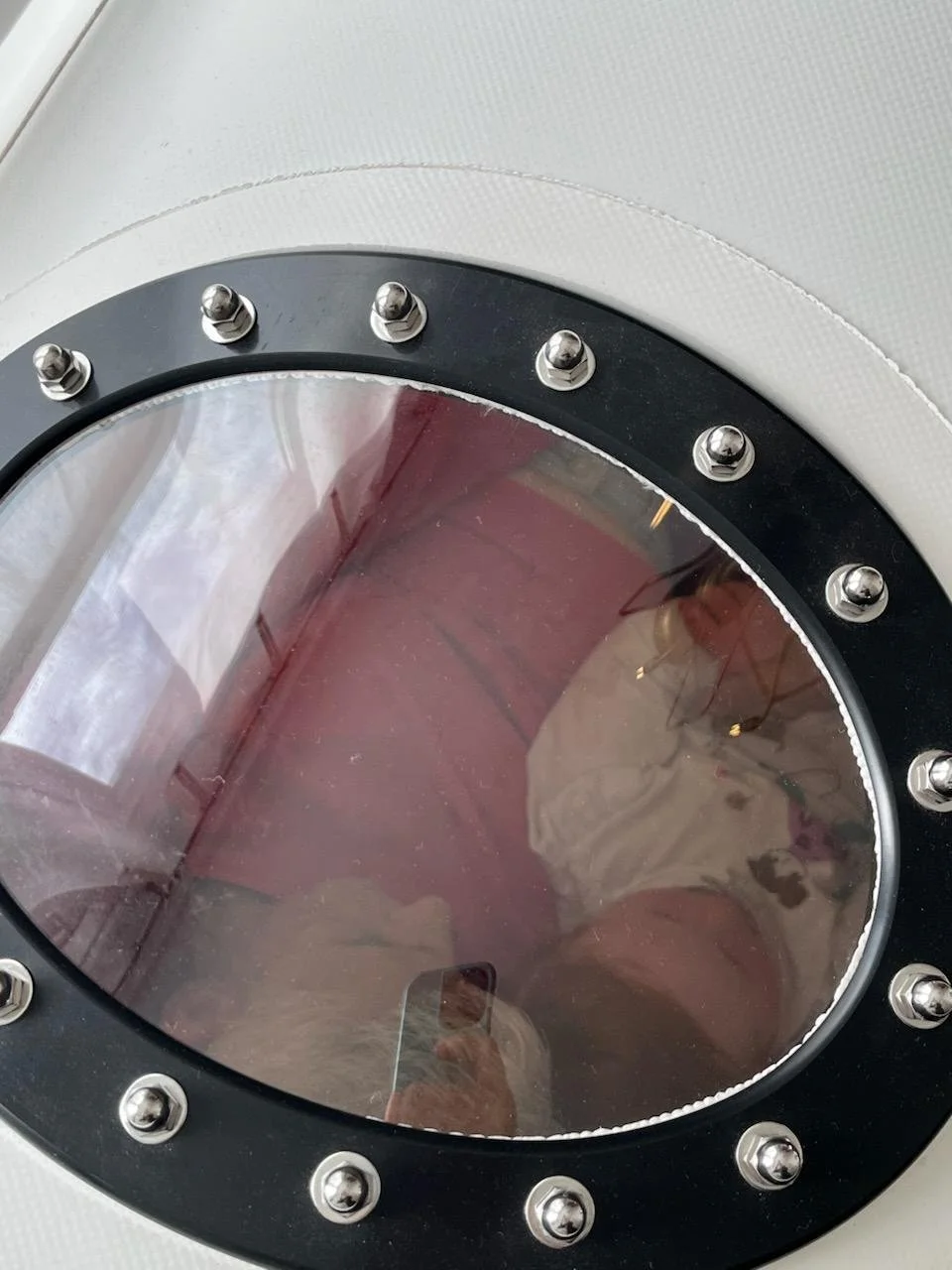
Hyperbaric oxygen therapy (HBOT) requires a load phase of 4-6 hours per week for 4-6 weeks. For more information check out the HBOT page on our site. This time is separate from therapy time. Many individuals opt for 90-120min sessions to accommodate their schedules.
Reflex Integration research is based off a minimum of 30 days.
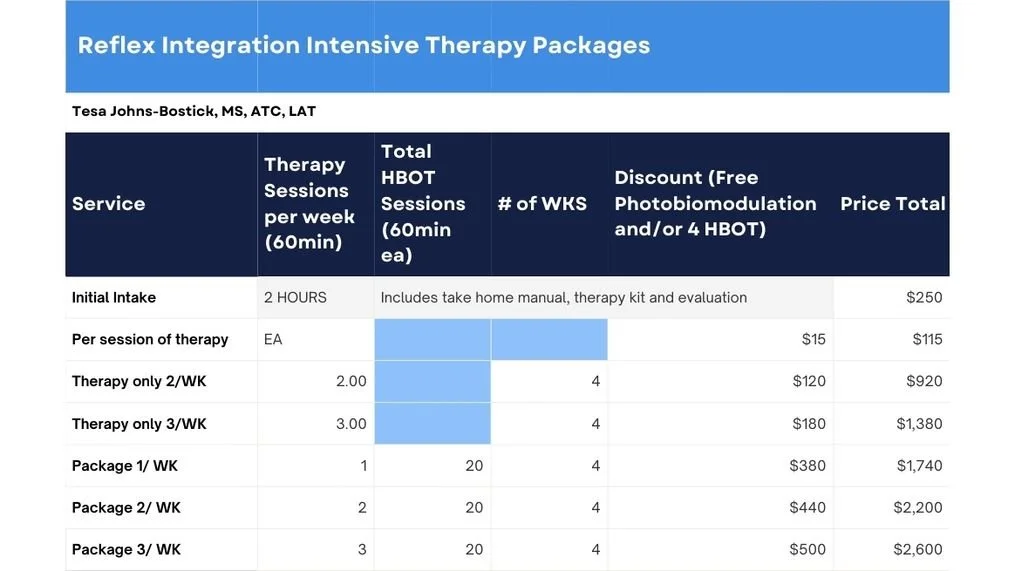
Bodywork may be recommended in addition to the packages if the therapist sees joint restriction that may be preventing your child from successfully completing their full movement patterns. These are scheduled in 30min increments.
Our therapy packages are thoughtfully tailored to meet your specific needs and the unique needs of your child, taking into account developmental goals, time availability, home life demands, and the level of support that can realistically be carried over between sessions. Reflex integration is a shared commitment—one that involves not only the therapist, but the family as a whole. Consistency, communication, and collaboration are essential to meaningful progress.
The overall plan of care is designed to gently reduce reliance on lower brain center reflex patterns while supporting the development of higher brain center connections responsible for regulation, coordination, learning, and adaptability. Every child’s nervous system is different; some children integrate more quickly than others, and precise timelines are not possible to predict. Current literature and clinical models generally support a minimum of 30 days of consistent work as a foundational starting point, with progress continuing as the nervous system builds more efficient and resilient pathways over time.
Client Reviews
“I can’t say enough good things Happy Valley Bodyworks! My four year old daughter has Down Syndrome and is developmentally delayed in part due to retained primitive reflexes. It’s been difficult finding like-minded people to assist us and Kelly has been such a blessing to work with.
We started by seeing Kelly for CranioSacral Therapy. Before we even had our first appointment, I had a list of additional places that could also assist us. Kelly is incredibly knowledgeable about child development in many different ways and I have learned so much during our appointments with her. She’s very go with the flow with my daughter which is important for building her trust.
After seeing Kelly for a few months, we began seeing Rebecca for sessions in the Hyperbaric Chamber. Rebecca was so good with my daughter and interacted with her to keep her distracted during the sessions. She always answered any questions we had about the therapy and provided the information we needed for next steps after our initial sessions were complete.
I can’t even begin to list all of the changes we’ve witnessed since utilizing these therapies. They’ve calmed her nervous system and helped integrate retained reflexes. She did not crawl on her hands and knees until she was 3 1/2 and after one of our cranio sessions, hands and knees crawled without prompting and has been doing it ever since. She is walking with significantly less assistance than when we started. She has also begun successfully potty training, which wasn’t even on our radar when we started sessions in the spring of 2025. Her cognition has improved significantly. Since completing 20 sessions in the chamber, I have specifically noticed improved walking, better fine motor coordination (putting in puzzle pieces!), increased focus on tasks and hair growth.
We can’t recommend Happy Valley Bodyworks enough!.”
Shannon W.
“My daughter with an autoimmune condition that causes neurological symptoms began using the hyperbaric chamber about 3 months ago. With just two hours in the chamber per week, she has been making remarkable progress. We noticed improvement after the first two sessions and she has continued to make enormous gains since! Also all of the therapists at Happy Valley Bodyworks are very compassionate and extremely knowledgeable, excellent therapists.”
Sara R.
“We worked with Kelly a few years ago and she was fantastic! My son has recently started working with Tesa and their new Primitive Reflex Integration program and she is also fantastic! Highly recommend Happy Valley Bodyworks!”
Alyssa P.
“Tesa was just wonderful with my son while evaluating him for retained primitive reflexes. She truly connected with him and made him feel so comfortable. I am so thankful for her and for this service that HVBW is now providing!”
Lauren Z.
“The comprehensive collection of science and thought that went into this program is top notch. I saw improvements in my child in 72 hours of doing the integration exercises. We have made a lot of changes in our household and have utilized their network of allied health practitioners in State College as well. I’m so happy we found a lot of solutions here for our child. ”
-Anonymous